
Reviewed · JEWISH HERITAGE TOURS IN BUCHAREST
The Jewish heritage of Bucharest – half day walking tour
Bucharest’s Jewish quarter is not a neatly preserved old district. It is a story of fragments: narrow streets, communist apartment blocks, restored synagogues, one remarkable theater, and memorials that explain what was lost. This three-hour walk connects those pieces and gives you a clear account of Jewish life before the war, the Romanian Holocaust, and the community’s difficult years under communism.
I like the way the tour combines places you can enter, such as the Jewish Museum, Great Synagogue, and Coral Temple, with street-level clues that are easy to miss alone. I also like the human scale: guide Razvan Trancu is praised for using photos, answering questions, and adjusting the discussion to your interests. The main drawback is practical: synagogue access is limited by religious holidays, opening hours, safety decisions, and sometimes hot weather, so you must check conditions before booking.
Key points to know before you book
- Three hours on foot: The route covers the Old Town edge, former Jewish quarter, synagogues, museum, theater, school, kosher stop, and Holocaust Memorial.
- Razvan Trancu leads the walk: He speaks English and Italian and is known for clear historical explanation, current context, humor, and flexible conversation.
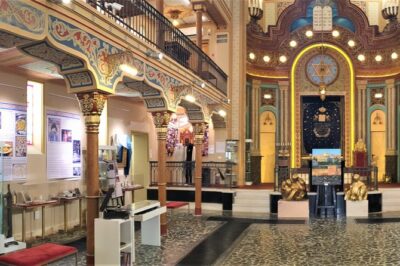
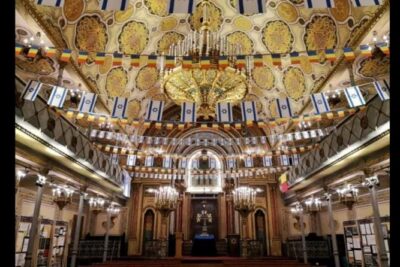
- The Coral Temple is the visual centerpiece: Its Neo-Mudejar design and 150-plus years of history make it one of Bucharest’s most striking religious buildings.
- The tour faces difficult subjects directly: You learn about Romanian Jewish life before the Second World War, the Holocaust, and the Communist period.
- Bring cash: Entrance costs about 30 lei per person at each synagogue or temple when open, and food is not included.
- Check the calendar carefully: Main sites are closed on weekends and may close during Rosh Hashana, Pesach, Shavuot, Yom Kippur, and Sukkot.
Why this walk matters in Bucharest
Bucharest once had a large and active Jewish community whose influence reached beyond religious life. Jewish residents shaped local business, education, architecture, food, theater, and everyday urban culture. Much of that world is no longer easy to see, and the remaining buildings are scattered among later construction.
That is why a walking tour helps. You are not simply moving from one grand synagogue to another. You are learning to read an altered neighborhood, where older streets sit beside communist apartment blocks and where an ex-temple now houses a community museum. The gaps are part of the story.
The route also avoids a common problem with heritage tours: presenting Jewish history as something that ended in 1945. Here, the story continues through the Communist regime, when religious and community life faced a different set of pressures. You get a fuller picture of survival, adaptation, and decline.
The subject matter is serious, but the tone is not meant to be grim from start to finish. The route includes architecture, education, theater, food, local customs, and urban change. I find that mix useful because it shows a living community, not only a memorialized one.
More Jewish Heritage Tours in Bucharest
- Bucharest Jewish Heritage | Holocaust Memorial | Private Car Tour
★ 5.0 · 38 reviews - Half-Day Jewish Heritage Walking Tour in Bucharest
★ 5.0 · 20 reviews - 4h Jewish Legacy in Bucharest – Private Tour by Car and Walking
★ 4.5 · 17 reviews
Starting at Starbucks and entering the Old Town
The meeting point is at the entrance of Starbucks, a simple landmark in or near Bucharest’s Old Town area. From there, the guide begins with about 20 minutes of orientation and walking through the historic center.
This opening matters because it places the Jewish quarter within Bucharest rather than treating it as an isolated subject. You begin with the city around you, then move toward the streets where Jewish institutions and homes once formed a more distinct neighborhood.
Do not expect an intact Jewish quarter preserved behind a gate. The modern city has changed the setting. Narrow roads are now flanked in places by communist apartment blocks, and only selected buildings or architectural details remain. The guide’s explanation is therefore important: without context, some stops might look like disconnected buildings.
The Old Town portion is also a gentle start to the three-hour walk. You have time to settle into the pace before the tour turns toward museums, synagogues, and memorial sites. Wear comfortable shoes, since the experience is built around walking rather than transport.
The Jewish Museum in a former temple
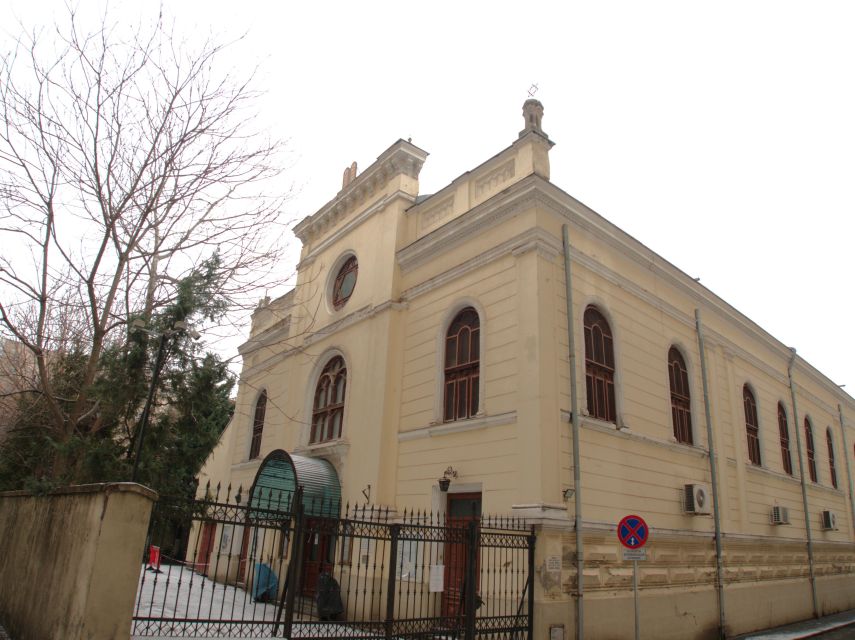
The Jewish Museum occupies an ex-temple, giving the visit an added layer. You are not only looking at objects and displays. You are also inside a building connected to the community’s religious past.
The stop lasts about 30 minutes, enough for a guided introduction rather than a long museum visit. The value here is the bridge between private community life and the city’s wider story. You can better understand what Jewish residents built, practiced, and contributed before the upheavals of the twentieth century.
I would pay attention to how the museum helps fill in what the streets no longer show. A building can survive while the social world around it changes beyond recognition. This stop gives names, events, and meaning to the physical remains you see later.
The museum is closed on Fridays, and the principal sites may close on weekends. That makes the day of your tour more important than it might seem. If the museum is a priority, confirm its schedule before you reserve.
The Great Synagogue and the Romanian Holocaust story
The Great Synagogue is one of the main stops, with about 30 minutes set aside for the visit. It is especially important because the tour connects the building to the history of the Romanian Holocaust.
That connection gives the visit weight. You are not seeing a religious structure only for its design. You are standing in a place that helps explain what happened to Romanian Jews during the Second World War and how the community was affected.
Expect the guide to place the synagogue within the wider political and social history of Romania. The supplied tour information does not promise a fixed script, and that is a benefit here. Razvan Trancu is described as willing to follow questions and discuss geography, politics, and current events alongside historical facts.
Entrance is not included. When open, the fee is 30 lei per person, around 6 US dollars. Cash is specifically recommended, and you should allow for this cost at the Great Synagogue and Coral Temple rather than treating the advertised group price as all-inclusive.
The Great Synagogue closes during Rosh Hashana, Pesach, Shavuot, Yom Kippur, and Sukkot. It may also close for other religious, safety, or weather-related reasons. These are not minor details. A synagogue visit can be the central reason you choose this tour, so ask about access before paying.
More Bucharest walking tours:
- Bucharest: City Highlights Guided Walking Tour
★ 4.9 · 1,482 reviews - Bucharest Highlights Walking Tour
★ 5.0 · 469 reviews - Bucharest: Ghost Stories & Romanian Mythology Walking Tour
★ 4.9 · 287 reviews - Bucharest: Guided Walking Tour with Romanian Snack
★ 4.9 · 228 reviews
The Jewish State Theater and a living cultural link
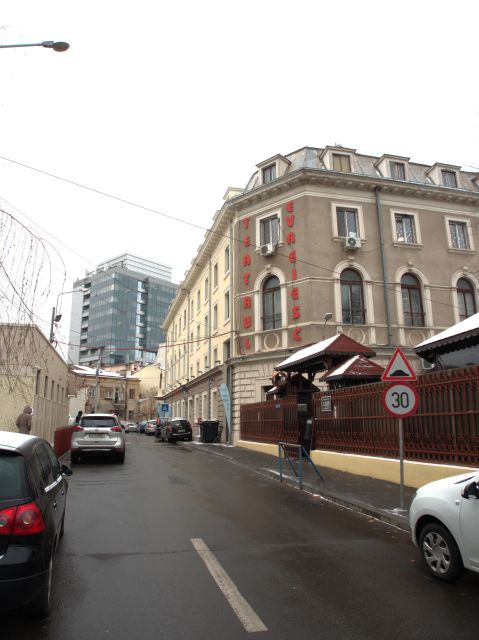
The Jewish State Theater is given roughly 30 minutes, making it more than a quick exterior photo stop. Its presence broadens the tour beyond worship and persecution.
The theater points to the role of Jewish culture in public life. It reminds you that a community is also made through language, performance, humor, education, and shared memory. That is a useful counterpoint to the more painful sections of the walk.
This stop may appeal especially to you if you want to understand how Jewish culture remains part of Bucharest today. The tour does not present the community as a vanished subject. It shows institutions that connect the past with the city’s present.
The pace can vary depending on what is open and how much your group wants to discuss. The stated timetable gives 30 minutes, but a guide who responds to questions may use that time differently from a fixed sightseeing script. That flexibility is one of the tour’s strengths, though it means you should not expect every minute to feel identical from one departure to another.
Laude-Reut and Jerusalem Lion Square
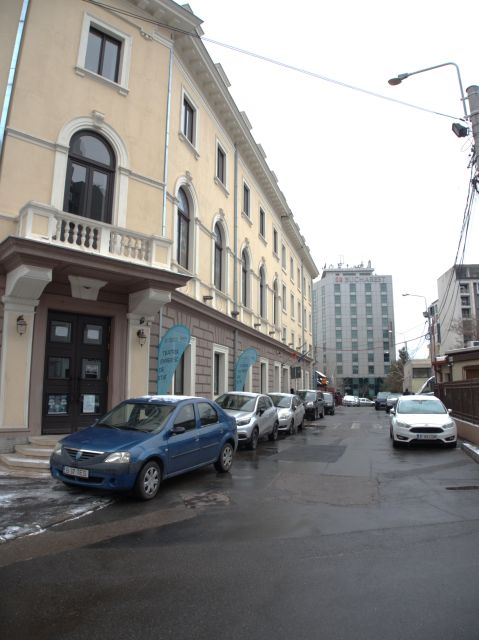
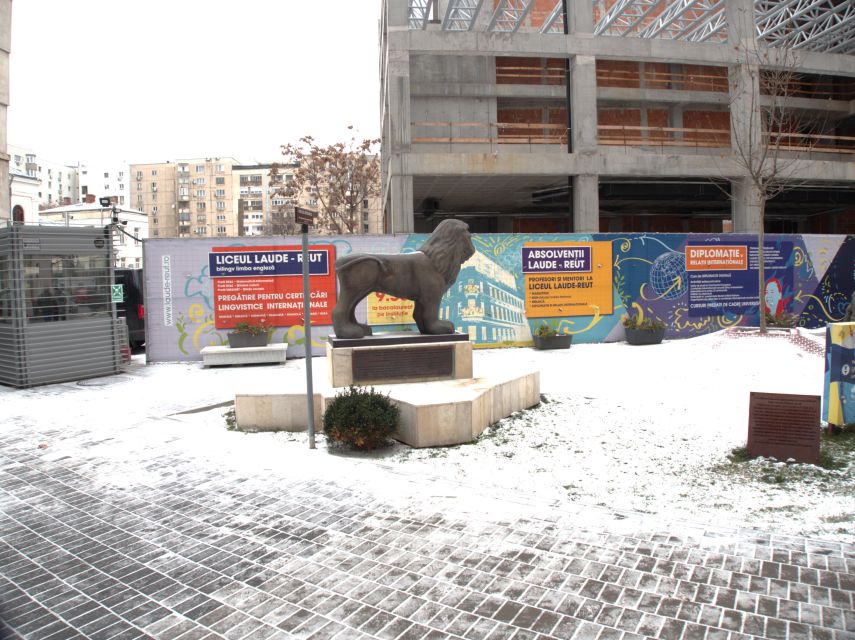
The Laude-Reut Educational Complex is a brief pass-by, listed at about 10 minutes. Jerusalem Lion Square receives around five minutes. Neither is presented as a long indoor visit, so think of these as context stops.
The educational complex helps show the continuing role of Jewish education in Bucharest. It shifts the focus from old buildings and historical trauma toward community life in the present. The square adds another small piece to the city’s Jewish identity and public memory.
These short stops work best when you see them as part of a chain. On their own, they may not justify a special visit. Alongside the museum, theater, synagogues, and memorial, they help you understand how Jewish identity appears in different forms across the city.
This is also where the guide’s skill matters. A brief street explanation can be useful if it answers why the site matters. Razvan has been praised for using photographs on an iPad to illustrate points, which can help when the modern surroundings obscure what once stood there.
A break at Avraham Kosher
The route includes a 30-minute break at Avraham Kosher for local snacks. Food is not included, so bring cash and budget separately for anything you order.
This pause is practical as well as cultural. Three hours of walking and concentrated historical discussion can be tiring, especially in Bucharest’s hot weather. A break gives you time to sit, ask questions, and process the material before the final synagogue and memorial.
Do not expect this to function as a full included meal. The information describes local snacks and excludes personal expenses. If you need a substantial lunch, plan that outside the tour.
The stop also adds an everyday dimension to the experience. Religious buildings and memorials can make a neighborhood feel like a place preserved in the past. A kosher food stop brings the subject back to ordinary choices and contemporary community life.
The Coral Temple’s Neo-Mudejar design
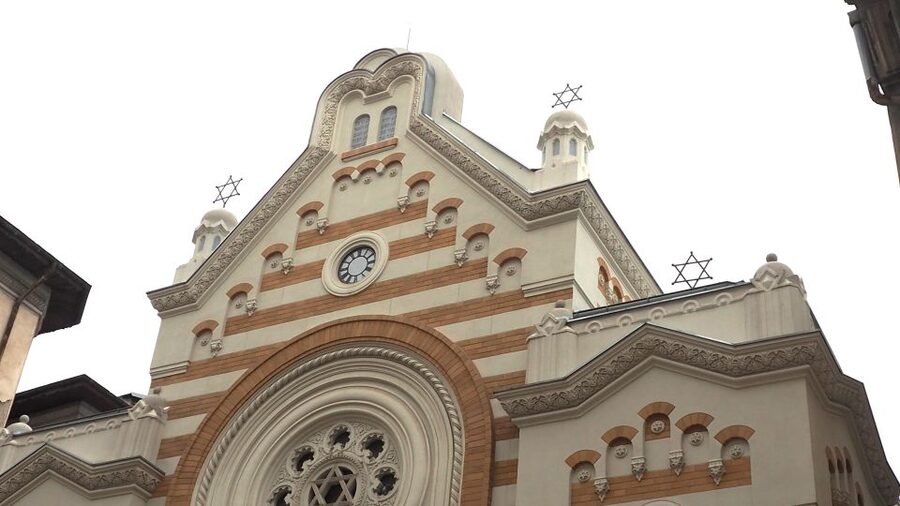
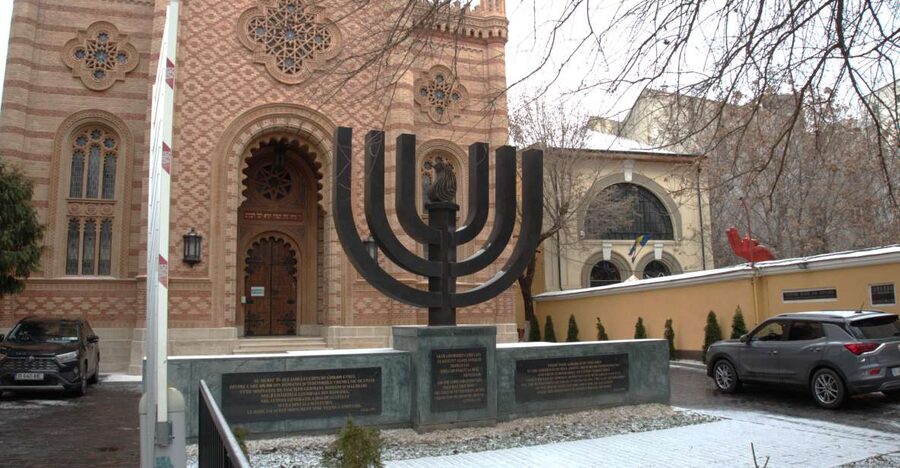
The Coral Temple receives about 20 minutes and is likely to be the visual highlight of the route. Its Neo-Mudejar style gives it a distinctive appearance, and its more than 150 years of history make it an important marker of Bucharest’s Jewish past.
The building has also been recently restored, which means you can appreciate its architectural details more clearly than you might at a neglected historic site. The restoration does not erase the difficult story attached to the community. Instead, it helps preserve a place where that story can still be encountered.
I would save a little energy for this stop. After several locations, it can be tempting to treat the final synagogue as just another building. The Coral Temple rewards a slower look, especially if the guide explains how its design fits into the city and the community that built it.
The same access rules apply here as at the Great Synagogue. When open, entrance is about 30 lei per person. It is closed during the major Jewish holidays listed above, and published visiting hours are Monday through Thursday from 9 a.m. to 2 p.m. and Friday from 9 a.m. to noon.
Ending at Bucharest’s Holocaust Memorial
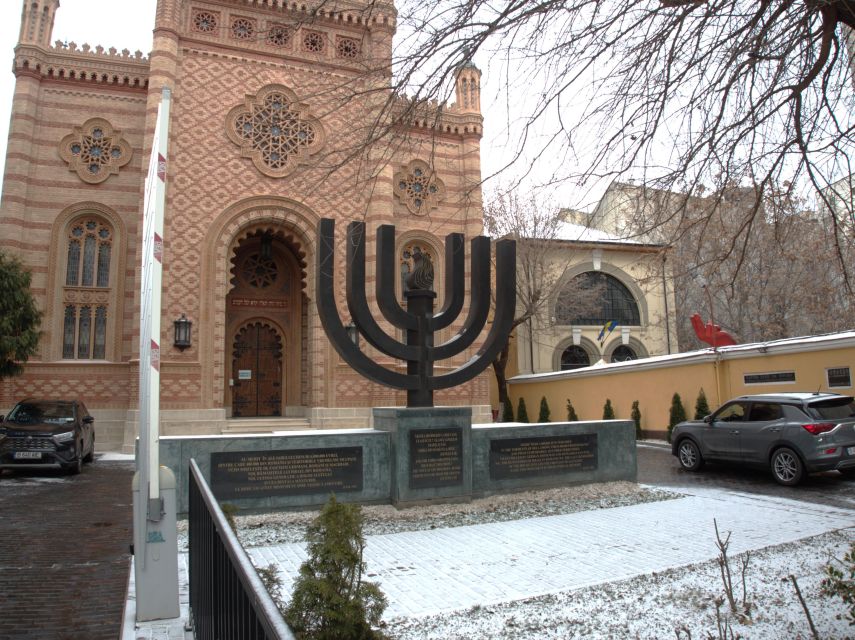
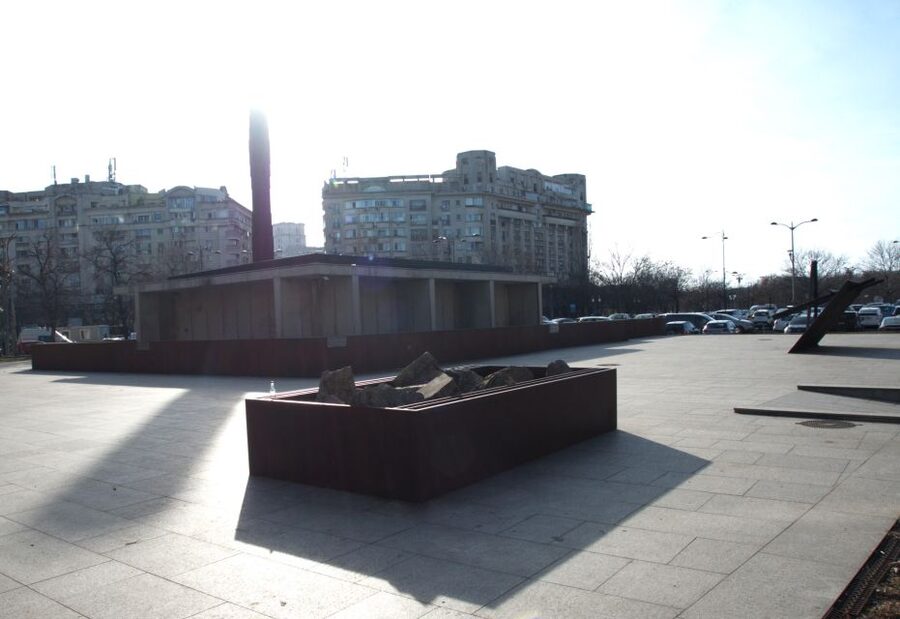
The tour ends at the Holocaust Memorial, after a visit of about 20 minutes. This is a fitting final stop because the memorial gathers the historical threads into one place.
The route has already introduced community life, architecture, education, theater, and religious institutions. At the memorial, you face the destruction and suffering that reshaped the Romanian Jewish community. Ending here gives the tour a clear emotional and historical direction without reducing the entire story to tragedy.
Allow yourself time to pause. A memorial visit is different from a museum display or guided building tour. You may want to look quietly, ask a final question, or remain with the subject for a few minutes after the guide finishes.
The ending point is not the original Starbucks meeting place. That is useful to know if you have a timed reservation afterward. The Holocaust Memorial is the final stop, so plan your next movement from there rather than assuming you will return to the Old Town.
The guide and the value of a small group
Razvan Trancu is the name most closely associated with this experience. He leads in English or Italian, and the strongest praise centers on his ability to explain Romanian and Jewish history in a clear, personal way.
His approach appears to go beyond memorized dates. He has been noted for discussing geography, politics, and current events, using photographs to make lost or changed places easier to understand. You can also ask questions and move at a pace that fits your interests.
The group is described as small, limited to seven participants, while the price information says 318 US dollars per group of up to 12. Because those details do not match perfectly, confirm the actual group limit and final pricing before booking. At the stated price, the value depends heavily on your group size. For a private or very small party, the cost buys focused attention and a tailored conversation. For a larger group, the per-person cost falls.
The activity is wheelchair accessible, which is useful information for planning. Still, the route is a walking tour through streets and multiple historic sites, and conditions inside older buildings can vary. Ask the provider about the exact route if you need detailed mobility information.
Is $318 good value?
The advertised price is $318 per group, with the supplied information giving a maximum of 12 people. Entrance fees and snacks are extra. Two synagogue or temple admissions at 30 lei each can add about 60 lei per person when both sites are open.
For a full private group, the base price can be reasonable because you receive three hours with a live guide and access to several sites that are difficult to connect on your own. The value is strongest for families, friends, or small cultural groups who want to ask questions rather than follow a large crowd.
For one or two people, the price feels high unless a very small group or private arrangement is confirmed. The listing also says the group is limited to seven, so I would ask for a firm answer before booking. That one question affects the cost per person more than almost anything else.
Free cancellation up to 24 hours before the tour and reserve-now, pay-later terms add useful flexibility. They do not solve the access problem, however. You should still confirm opening hours and holiday closures before setting aside a morning or afternoon.
Who will enjoy this tour most?
You will get the most from this experience if you want historical context, architecture, and difficult subjects handled together. It suits visitors who prefer a focused walking route to a general city sightseeing tour.
It is also a good choice if Jewish heritage is a central reason for your visit to Bucharest. The tour covers the main surviving institutions and ends at the Holocaust Memorial, while also showing how the community’s story continued under communism.
You may find it less suitable if you want a relaxed stroll with little discussion. The subject matter includes persecution, loss, and political change, and the guide’s role is to explain those events rather than skim over them.
The walk also requires schedule flexibility. Weekend departures may not work for the main objectives, Friday is not suitable for the museum, and religious holidays can close both major synagogue sites. Hot weather can affect opening schedules and comfort, so an early start may be preferable when available.
Practical advice for your three hours
Book only after checking the date, start time, language, group limit, and site access. English and Italian are offered, and starting times depend on availability.
Wear comfortable shoes and carry water, especially in hot weather. Bring cash for entrance fees, snacks, and any personal expenses. The tour itself includes the guided walk, but not admissions or food.
Dress and behave respectfully at religious sites. The information provided does not set out a formal dress code, so ask the guide or provider if you are unsure. The most important thing is to remember that these are active religious and community places, not simply photo stops.
Keep your schedule open after the tour if the subject affects you. The final memorial visit can be quiet and reflective, and you may not want to rush straight into another crowded attraction.
Should you book it?
Book this tour if you want Bucharest’s Jewish story explained as a connected account rather than a list of buildings. The combination of the Jewish Museum, Great Synagogue, Jewish State Theater, Coral Temple, kosher break, and Holocaust Memorial gives you a strong three-hour framework.
I would book with two conditions: confirm that the synagogues and museum will be open, and clarify whether your group will be capped at seven or can reach 12. If Razvan Trancu is leading, you can expect an engaged guide who brings photos, context, and room for questions.
Skip it if your schedule falls on a weekend or major Jewish holiday and the key interiors cannot be visited. Also reconsider if you want a cheap, casual walk, since admissions are extra and the per-person price can be steep for a very small party. For anyone seeking serious, well-guided Jewish heritage in Bucharest, though, this is one of the more useful half-day choices.
FAQ
How long is the Jewish heritage tour in Bucharest?
The walking tour lasts three hours.
Where does the tour begin?
The meeting point is at the entrance door of Starbucks.
Where does the tour end?
The tour ends at the Holocaust Memorial in Bucharest.
Which languages are available?
The live guide is available in English and Italian.
Are entrance fees included?
No. Entrance fees are separate. When open, the Great Synagogue and Coral Temple each charge 30 lei per person, around 6 US dollars.
Can the synagogues and museum be closed?
Yes. The main sites may close on weekends, religious holidays, or for safety reasons. The Coral Temple and Great Synagogue are closed during Rosh Hashana, Pesach, Shavuot, Yom Kippur, and Sukkot. The Jewish Museum is closed on Fridays.
More history-led tours in Bucharest
- Bucharest: 3-Hour Dark History Tour with a Local
★ 4.9 · 301 reviews - Bucharest: Small Group History, Art & Secrets Tour
★ 4.7 · 152 reviews - Guided Walking Tour of Historical Bucharest
★ 5.0 · 84 reviews - Private Bucharest: History & Food with Traditional Meal
★ 5.0 · 34 reviews
Newest Bucharest trips we have written up
- Bucharest: Dealu Mare Winery Private Trip with Wine Tasting★ 4.9 · 6 reviews
- Winery touring & private wine tasting – one day private tour★ 5.0 · 3 reviews
- Traditions in Bucharest: Village Museum and Wine Tasting★ 5.0 · 8 reviews
- Your rendez-vous with Europe’s past: time-travel to Maramures, Transylvania★ 5.0 · 6 reviews
- Village Museum Bucharest Guided Tour★ 5.0 · 6 reviews
- Private Wine Tasting at Bucharest’s First Wine Bar★ 5.0 · 3 reviews
- Walking Tour of Bucharest City Center – Private Tour★ 5.0 · 4 reviews
- Wine tasting in Bucharest Old town – bonus cheese platter★ 4.5 · 6 reviews
Jewish Heritage Tours in Bucharest, compared.
Bucharest Jewish Heritage | Holocaust Memorial | Private Car Tour
Read our review →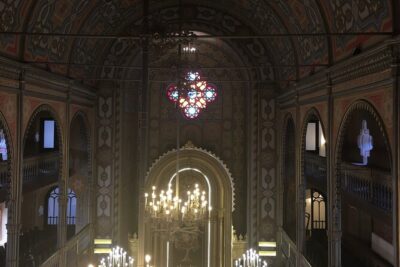
4h Jewish Legacy in Bucharest – Private Tour by Car and Walking
Read our review →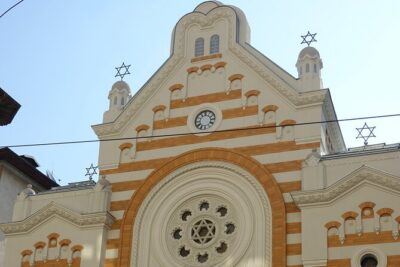
Browse the lists this tour appears in